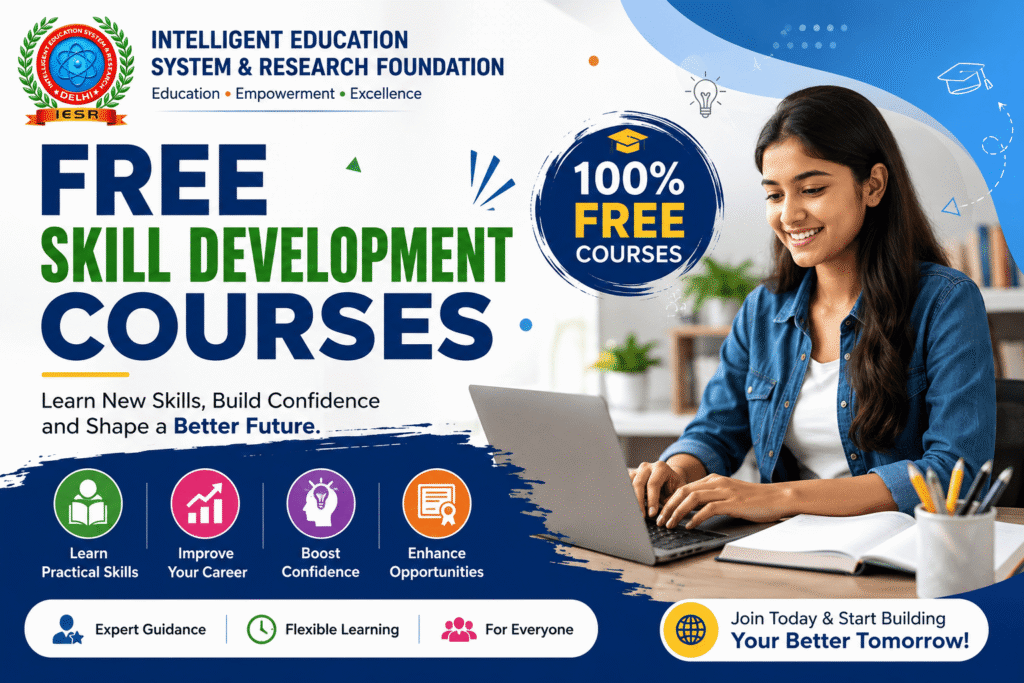
In today’s competitive world, having the right skills can make a major difference in your education, career, and financial future. Academic qualifications are important, but practical skills can help you become more confident, employable, and prepared for real-world opportunities.
Free skill development courses provide an excellent opportunity for students, young people, job seekers, women, and individuals from different backgrounds to learn useful skills without worrying about high course fees.
What Are Free Skill Development Courses?
Free skill development courses are training programs designed to help individuals develop practical, professional, technical, and employability skills. These courses can cover areas such as digital literacy, communication, computer skills, vocational training, career preparation, entrepreneurship, and other job-oriented skills.
The main goal of skill development is to help learners gain knowledge that can be applied in education, employment, business, or everyday life.
Why Are Skill Development Courses Important?
The job market is continuously changing. Employers increasingly look for candidates who can demonstrate practical abilities along with educational qualifications.
Free skill development programs can help individuals:
- Improve their practical knowledge
- Develop job-ready skills
- Increase confidence
- Prepare for employment opportunities
- Improve communication and interpersonal skills
- Learn digital and computer skills
- Explore new career options
- Develop entrepreneurial abilities
- Become more independent
Who Can Join Free Skill Development Courses?
Skill development courses can be useful for people at different stages of their careers and education.
1. Students
Students can learn additional skills alongside their regular education. Digital skills, communication, career preparation, and vocational training can help them become better prepared for future opportunities.
2. Job Seekers
People looking for employment can use skill development programs to improve their resumes and acquire practical skills that employers value.
3. Youth
Young people can explore different career paths and develop employment-oriented skills that can help them enter the workforce.
4. Women
Skill development can provide women with opportunities to learn professional and vocational skills and explore employment, freelancing, or entrepreneurship.
5. Individuals Looking for a Career Change
Learning a new skill can help professionals and other individuals explore different career opportunities or improve their existing capabilities.
Popular Areas Covered in Skill Development Programs
Depending on the organization and course, free training programs may cover a wide range of subjects.
Digital Literacy
Digital literacy helps learners understand computers, smartphones, internet usage, online services, and other essential digital tools.
Computer Skills
Basic computer training can include typing, word processing, spreadsheets, presentations, email, and internet skills.
Communication Skills
Good communication is important for interviews, workplaces, education, and professional relationships. Training may include verbal communication, written communication, presentation skills, and interpersonal skills.
Career Guidance
Career guidance programs help learners understand different career options, identify their strengths, and make better educational and professional decisions.
Resume and Interview Preparation
Job seekers can learn how to create an effective resume, prepare for interviews, answer common interview questions, and present themselves professionally.
Vocational Skills
Vocational courses focus on practical skills that can be used for employment or self-employment. Depending on the program, this may include beauty and wellness, tailoring, handicrafts, technical skills, or other trades.
Entrepreneurship Skills
Entrepreneurship training can help individuals understand business basics, planning, customer service, marketing, budgeting, and other important aspects of starting or managing a small business.
Benefits of Choosing Free Skill Development Courses
No or Low Financial Barrier
Free courses make learning more accessible to people who may not be able to afford expensive training programs.
Practical Learning
Many skill development programs focus on practical knowledge that can be applied outside the classroom.
Better Career Preparation
Learning additional skills can help students and job seekers prepare for employment opportunities.
Increased Confidence
Developing new abilities can improve confidence when applying for jobs, attending interviews, or starting a new professional journey.
Flexible Learning Opportunities
Some programs may offer flexible schedules, making it easier for learners to balance training with education, work, or family responsibilities.
How to Choose the Right Free Skill Development Course
Before joining a course, consider the following factors:
- Choose a relevant skill: Select a course that matches your career goals or interests.
- Check the course content: Understand what topics and practical skills are included.
- Look at the duration: Choose a program that fits your schedule.
- Check eligibility: Make sure you meet the course requirements.
- Consider practical training: Programs with hands-on learning can provide greater value.
- Ask about certification: If a certificate is provided, understand how it can support your career.
- Check the training organization: Choose a trustworthy organization with a clear training structure.
How Free Skill Development Courses Can Support Employment
Skill development does not guarantee employment, but it can improve your preparation for the job market. A combination of education, practical skills, communication abilities, and interview preparation can help candidates present themselves more effectively.
For example, someone with a basic educational qualification can strengthen their profile by learning computer skills, communication, resume writing, and job-readiness skills.
Role of NGOs in Skill Development
Non-governmental organizations (NGOs) can play an important role in making education and skill development more accessible to communities. Through training programs, workshops, career guidance, and vocational education, NGOs can help individuals develop practical skills and become better prepared for employment and self-employment opportunities.
Organizations such as Intelligent Education System & Research Foundation can contribute to community development by promoting education, skill development, career awareness, and employability.
Start Learning and Build Your Skills
Learning does not have to stop after completing school or college. Developing new skills can be a continuous process that helps you adapt to changing career opportunities.
If you are a student, job seeker, young person, woman, or anyone interested in improving your abilities, explore suitable free skill development courses and choose a program that aligns with your goals.
The right skill, combined with dedication and consistent practice, can become an important step toward a brighter career and a more independent future.
Conclusion
Free skill development courses can make learning more accessible and help individuals build practical abilities for education, employment, and entrepreneurship. By learning relevant skills and continuously improving them, individuals can become more confident and better prepared for future opportunities.
Whether you want to improve your computer knowledge, communication skills, vocational abilities, or career readiness, skill development can be an important step toward achieving your professional goals.
Frequently Asked Questions (FAQs)
Q1. What are free skill development courses?
Free skill development courses are training programs that allow learners to develop practical, professional, digital, vocational, or employability skills without paying a course fee or with minimal cost.
Q2. Who can join free skill development courses?
Students, youth, job seekers, women, professionals, and individuals interested in learning new skills may be eligible, depending on the specific program requirements.
Q3. Are free skill development courses useful for jobs?
Yes. Skill development courses can help learners improve practical knowledge, employability skills, communication, and job-readiness. However, employment depends on individual qualifications, skills, experience, and available opportunities.
Q4. What skills can I learn through free training programs?
Courses may include computer skills, digital literacy, communication, vocational skills, career guidance, resume preparation, interview skills, entrepreneurship, and other job-oriented training.
Q5. How do I find a suitable free skill development course?
Research organizations offering training programs, check eligibility and course content, compare schedules, and choose a program that matches your career interests and goals.